





Thomas Blass
- Media Contact
IN MEMORIAM
Professor Blass died December 29, 2021, at the age of 80. He was born in Budapest, Hungary, during World War II, and survived the Nazi invasion of Hungary, which killed more than 550,000 Jews. After the war, Professor Blass left Hungary with his mother, lived in a displaced persons camp in Hallein, Austria, then moved to Toronto, Canada, and ultimately settled in the United States, where he received his Ph.D. and became one of the world's foremost experts on Stanley Milgram's famous studies on obedience to authority.
Social Psychology Network is maintaining this profile for visitors who wish to learn more about Professor Blass's work.
Thomas Blass is an internationally recognized expert on obedience to authority and on the research and legacy of Stanley Milgram. A Holocaust survivor born in Budapest, Hungary, during World War II, Dr. Blass was a child when the Nazis occupied his country in 1944 and murdered 550,000 of his fellow Hungarian Jews. Following the war, Dr. Blass left Hungary together with his mother. After spending a couple of years in a displaced persons camp near Salzburg, Austria, they emigrated to Toronto, Canada, where Dr. Blass spent part of his childhood. He relocated to the United States for his secondary and higher education and stayed on to make it his permanent home.
After receiving his B.A. in mathematics and Ph.D. in social psychology from Yeshiva University, Dr. Blass held research positions at the University of Maryland Psychiatric Institute, Sheppard-Pratt Hospital, and Downstate Medical Center. For most of his career he has been at the Department of Psychology, University of Maryland Baltimore County, where he is currently Professor of Psychology.
In addition to his interests in obedience and the work of Stanley Milgram, Dr. Blass has researched a variety of topics over the years, including tactics of social influence, attributional processes, the interaction of personality and situational factors in social behavior, scale development of personality, attitudinal, and other self-report measures relevant to social behavior, and psychological perspectives on the Holocaust.
Primary Interests:
- Aggression, Conflict, Peace
- Attitudes and Beliefs
- Causal Attribution
- Interpersonal Processes
- Personality, Individual Differences
- Persuasion, Social Influence
Note from the Network: The holder of this profile has certified having all necessary rights, licenses, and authorization to post the files listed below. Visitors are welcome to copy or use any files for noncommercial or journalistic purposes provided they credit the profile holder and cite this page as the source.
Image Gallery

Video Gallery
2013 Obedience to Authority Opening Address
Books:
-
Blass, T. (2004). The man who shocked the world: The life and legacy of Stanley Milgram. New York: Basic Books.
- Linked image: Book cover of "The Man Who Shocked the World"
- Blass, T. (Ed.). (2000). Obedience to authority: Current perspectives on the Milgram paradigm. Mahwah, NJ: Lawrence Erlbaum Associates.
- Blass, T. (Ed.). (1976). Contemporary social psychology: Representative readings. Itasca, Ill.: F. E. Peacock Publishers.
- Blass, T. (Ed.). (1977). Personality variables in social behavior. Hillsdale, N.J.: Lawrence Erlbaum Associates.
-
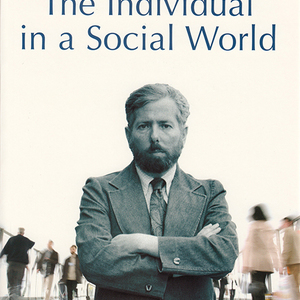
Milgram, S. [Blass, T., Editor] (2010). The individual in a social world: Essays and experiments (3rd expanded ed.). London: Pinter & Martin.
- Linked image: Book cover of "The Individual in a Social World"
Journal Articles:
- Blass, T. (1996). The Milgram obedience experiment: Support for a cognitive view of defensive attribution. Journal of Social Psychology, 136, 407-410.
- Blass, T. (1991). Understanding behavior in the Milgram obedience experiment: The role of personality, situations, and their interactions. Journal of Personality and Social Psychology, 60, 398-413.
- Blass, T. (1995). Right-Wing Authoritarianism and role as predictors of attributions about obedience to authority. Personality and Individual Differences, 19, 99-100.
- Blass, T. (1984). Social psychology and personality: Toward a convergence. Journal of Personality and Social Psychology, 47, 1013-1027.
- Blass, T. (1999). The Milgram paradigm after 35 years: Some things we now know about obedience to authority. Journal of Applied Social Psychology, 29, 955-978.
- Blass, T. (1996). Attribution of responsibility and trust in the Milgram obedience experiment. Journal of Applied Social Psychology, 26, 1529-1535.
- Blass, T., & Schmitt, C. (2001). The nature of perceived authority in the Milgram paradigm: Two replications. Current Psychology, 20, 115-121.
- Hahn, J., & Blass, T. (1997). Dating partner preferences: A function of similarity of love styles. Journal of Social Behavior and Personality, 12, 595-610.
- Krackow, A., & Blass, T. (1995). When nurses obey or defy inappropriate physician orders: Attributional differences. Journal of Social Behavior and Personality, 10, 585-594.
Other Publications:
- Blass, T. (2002). The man who shocked the world. Psychology Today, 68-74.
Courses Taught:
- Applied Social Psychology
- Research Design and Analysis II
- Social Psychology (graduate level)
- Social Psychology (undergraduate level)
